In brief
- Standard residential construction in Ghana runs about GHS 3,500–5,500 per m² in 2026; mid-specification commercial offices GHS 6,000–9,500 per m².
- Materials make up 50–60% of cost, and labour 25–35% of a residential budget. Hold 10–15% as contingency.
- A benchmark gives a planning number. An accurate budget needs a Bill of Quantities from a quantity surveyor.
Construction cost in Ghana depends on three variables: building type, specification level, and location. A basic residential structure in a secondary city costs less per square metre than a reinforced concrete commercial building in Accra. A contractor quoting a fixed rate per square metre without knowing the full specification is quoting a number that will not survive the design stage.
This guide gives project owners the benchmarks Consar's teams use to frame budgets before detailed design. The figures below reflect 2026 construction market conditions in Ghana, including current prices for cement, steel reinforcement, skilled labour, and other input costs. National construction sector pricing data is compiled by the Ghana Statistical Service.
What drives construction cost in Ghana
Four cost categories determine the total for any project.
Materials. Building materials account for 50–60% of total construction cost: cement, steel reinforcement, blocks, roofing sheets, timber, electrical fittings, and imported fixtures. Cement prices in Ghana track the producer price index and fluctuate with the Ghana cedi exchange rate for imported components. In 2025–2026, a 50kg bag of standard-grade cement in Accra ranged from GHS 95 to GHS 145 depending on brand and purchase volume; premium grades run GHS 185–240 per bag. High-tensile steel reinforcement bars run GHS 19,000–25,500 per tonne, tracking USD-denominated international commodity prices. A stronger cedi — GHS/USD moved from approximately 16 in 2024 to 11 by early 2026 — reduced the GHS cost of imported materials over that period, though future exchange rate movement remains unpredictable for projects spanning 12–18 months.
Labour. Skilled labour is the second-largest cost category: block layers, carpenters, steel fixers, concreters, and finishing trades. Unskilled labour rates in Ghana are lower than in European or North American markets. Skilled trades command a premium, particularly in Accra and on mine sites where competing employers drive rates up. Labour costs for a standard residential project run 25–35% of total budget.
Plant and equipment. Concrete mixing, earthwork, and materials handling require equipment. Contractors who own their plant produce predictable rates. Contractors who hire plant pass availability risk and hire-rate volatility to the client through variations or programme delays.
Professional fees. Architectural, structural, and services engineering fees, plus project management and quantity surveying, add 8–12% to the construction budget for commercial and institutional projects. Design professionals work to Ghana Standards Authority building specifications, which set minimum requirements for structural design, materials, and fire safety.
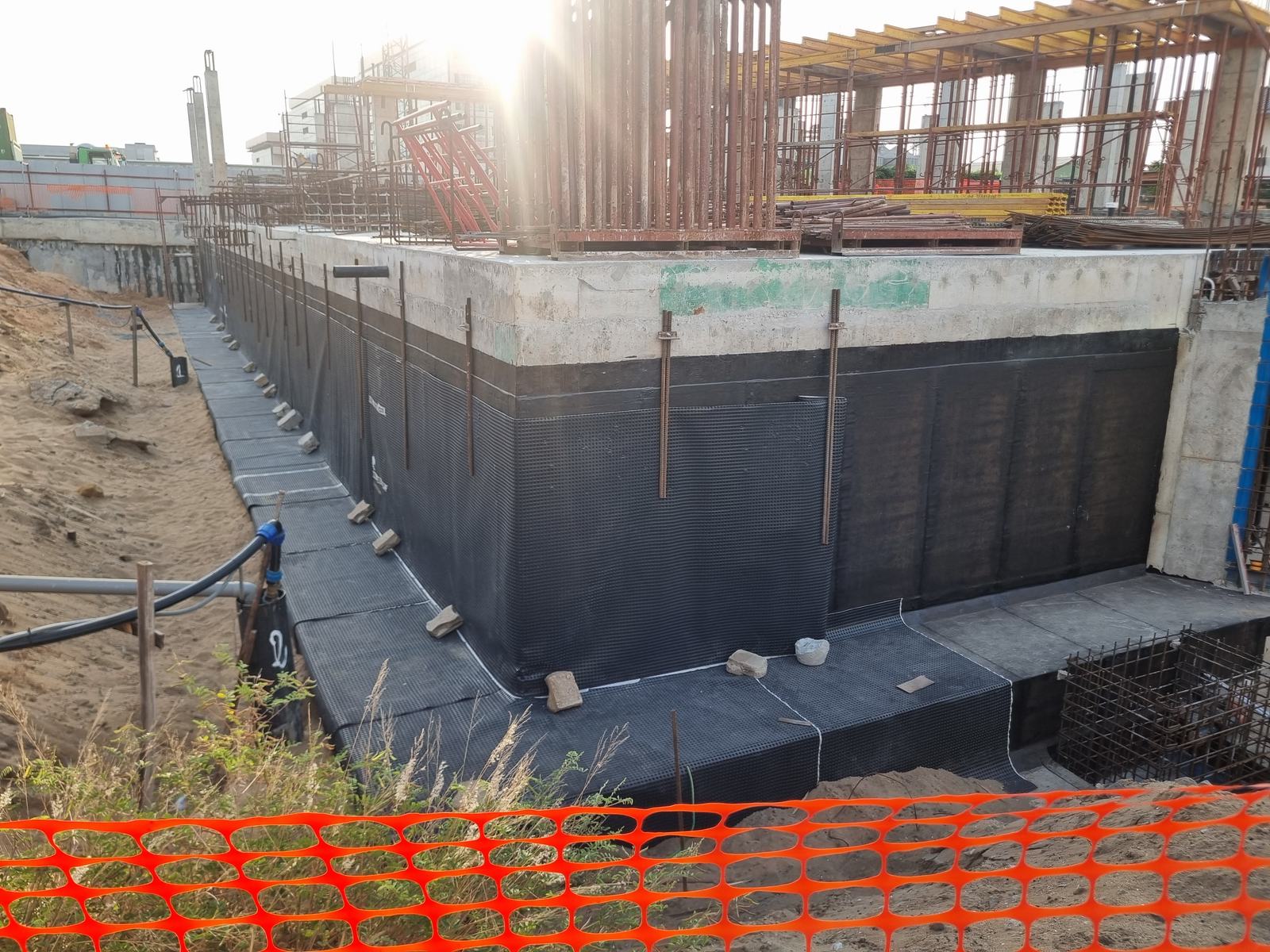
Cost of building a house in Ghana
For Ghanaian families and private investors, house construction in Ghana is the largest financial commitment most will make. Building a house in Ghana at standard specification costs GHS 3,500–5,500 per square metre. A 200m² home in Ghana at mid-specification sits in the GHS 700,000–1,100,000 range for construction cost alone.
Project owners want to know the same thing: how much does it cost to build a house in Ghana from ground to handover. The full picture has four components: land, professional fees, a building permit, and the construction contract. The cost of land varies by district. In secondary cities, land costs a fraction of what construction does. Prime Accra locations can reverse that ratio. The cost to build a house, meaning the construction contract itself, is what this section prices.
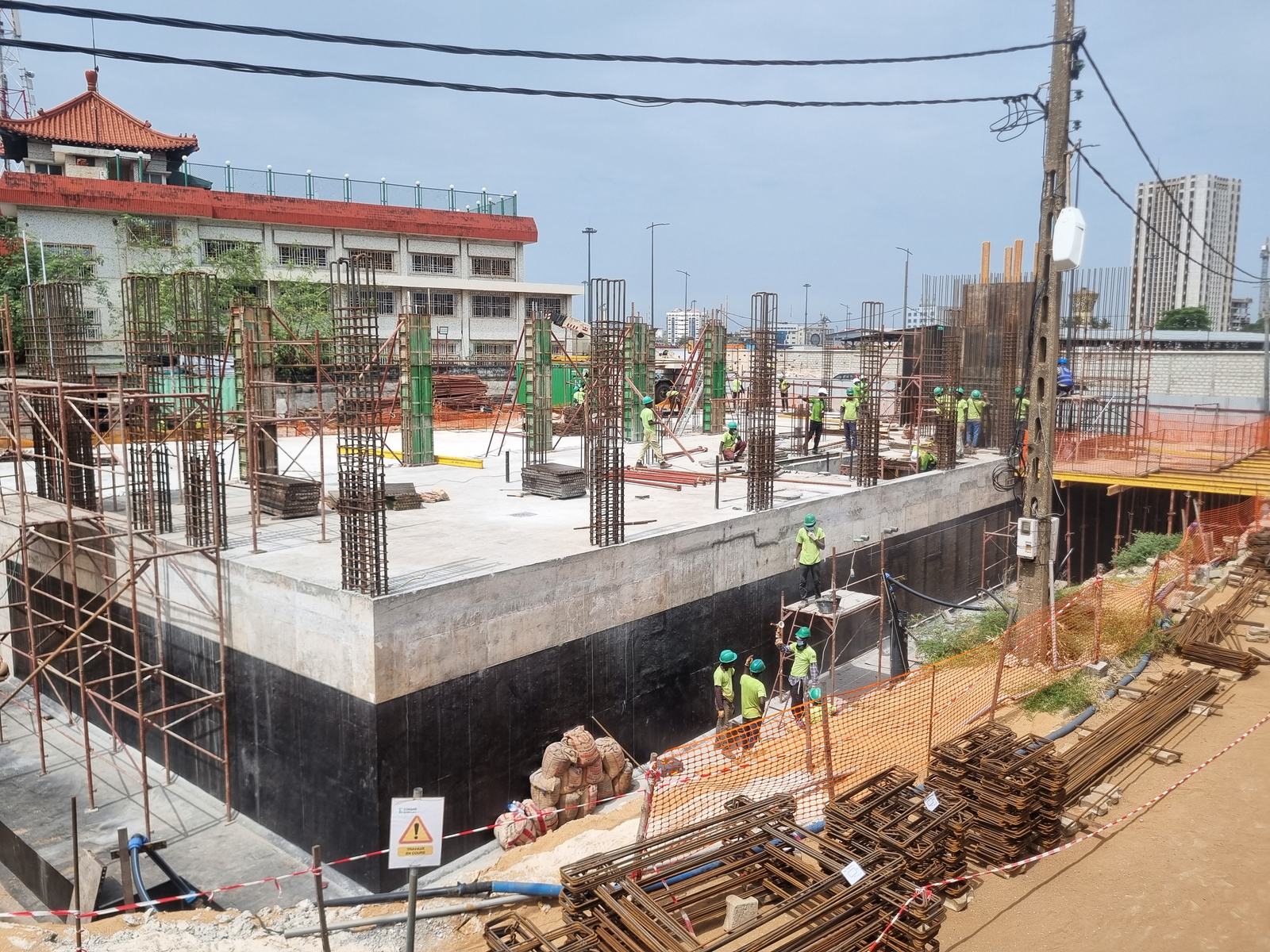
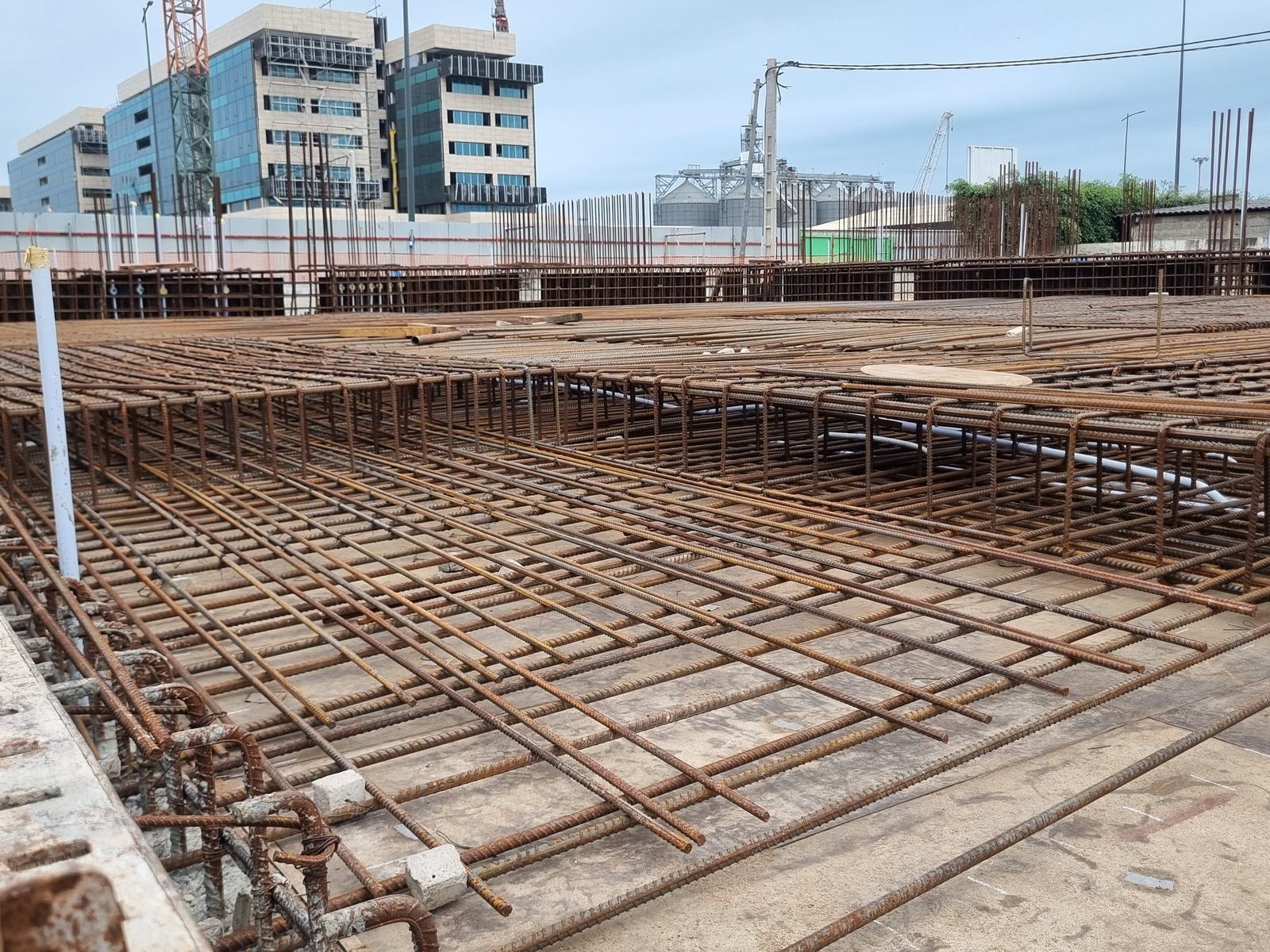
Building a house in Ghana involves a construction process that runs through foundation, structural frame, roof, envelope, plumbing and electrical installation, and finishing trades. Each step in building a house carries different cost exposure. Foundation and structure track concrete and steel prices. Finishing trades diverge based on specification.
House construction at standard specification covers cement blocks, reinforced concrete frame, long-span or corrugated roofing, floor screed, plumbing and electrical rough-in, and painted walls. Building a home to high specification adds imported tiles, aluminium windows, suspended ceilings, fitted kitchens, and air conditioning installation. Those choices push total building costs from GHS 5,500/m² to above GHS 8,000/m².
The cost of building a house in Ghana moves with materials prices and exchange rate shifts. House in Ghana construction involves cost pressures that hit every residential project: imported materials priced in USD and rainy season programme risk. Project owners should hold 10–15% of the building budget as contingency.
The overall cost of a residential build is manageable when project owners understand it before design commences. Ghanaian project owners who commission a preliminary cost plan before signing with an architect know their exposure before committing. Understanding the cost at that stage avoids the budget renegotiation that follows when tender numbers exceed initial expectations.
Building a home in Ghana, a dream home or a rental investment, requires a specific budget and a contractor with documented cost delivery on comparable projects. For those who invest in Ghana through construction, part of the building process is selecting a contractor with comparable residential work delivered on budget.
House in Ghana requires accurate input from a contractor who has priced and built comparable work. A benchmark rate from a guide like this gives a planning number. A contractor's preliminary cost plan gives a project-specific number to take to a lender.
Cost to build a house in Ghana: how much does it cost by bedroom count
Two bedroom and three bedroom house in Ghana: floor area and building costs
A 3-bedroom house in Ghana at standard specification typically carries a layout of the house covering 150–180m²: living areas, kitchen, bathrooms, and bedrooms across a single or double storey. A 4-bedroom house in Ghana at the same specification adds roughly GHS 400,000–600,000 to the construction cost, depending on the layout of the house and site conditions.
Buying a home vs building: plumbing and electrical decisions in Ghana
Many Ghanaian families compare buying a home to building from scratch. The cost around GHS 700,000–1,000,000 for a standard 3-bedroom build in Accra's suburbs places self-build within reach of many residential developments. The difference is control: home construction through a licensed contractor lets project owners specify quality of materials, layout configuration, and finish level. A clear contract gives that control a legal framework.
Luxury homes in Ghana, at GHS 6,500–10,000/m² and above, carry imported material costs that track EUR and USD exchange rates directly. Planning and budgeting for a luxury residential project requires currency risk to be included in the contingency from the start.
Construction cost benchmarks by building type (2026)
These benchmarks reflect Ghana construction market conditions as of early 2026. They cover structure, finishes, and fixed fittings, but exclude land cost, professional fees, and site preparation unless stated.
Standard residential construction (3–5 bedroom house, cement block construction):
GHS 3,500–5,500 per square metre of floor area, depending on finish specification. A 250m² house at mid-specification lands in the GHS 875,000–1,375,000 range for construction cost alone. This covers structure, cement blocks, roof covering, floor screed, plumbing and electrical rough-in, and basic finishes. High-specification finishes push the upper end beyond GHS 6,500/m²: imported tiles, aluminium windows, suspended ceilings, fitted kitchens.
Commercial office construction (reinforced concrete frame, mid-specification):
GHS 6,000–9,500 per square metre. A 1,000m² office floor plate at mid-specification costs GHS 6–9.5 million to build. Premium Grade A commercial space with full MEP systems, raised floors, and curtain wall facades runs GHS 10,000–14,000/m² and above.
Warehouse and industrial construction (steel frame or concrete, basic specification):
GHS 2,800–4,500 per square metre. Warehouse construction is the most cost-efficient building type in Ghana per unit area, because fit-out specification is minimal and structural spans are achieved with lower cost steel or concrete portal frames.
Civil infrastructure (roads, drainage, water treatment):
Civil construction costs vary too widely by scope and ground conditions for a per-square-metre figure to be useful. Road construction costs in Ghana range from GHS 8 million to GHS 25+ million per kilometre depending on pavement specification, earthworks requirement, and drainage scope. Water treatment infrastructure is sized in per-litre-per-day capacity cost, typically USD 150–400/m³/day for new-build plants in Ghana.
Institutional construction (schools, hospitals, public buildings):
GHS 5,500–8,000 per square metre, depending on the level of MEP services and fit-out required. Hospitals and medical facilities sit at the high end because of specialist ventilation, plumbing, and electrical requirements.
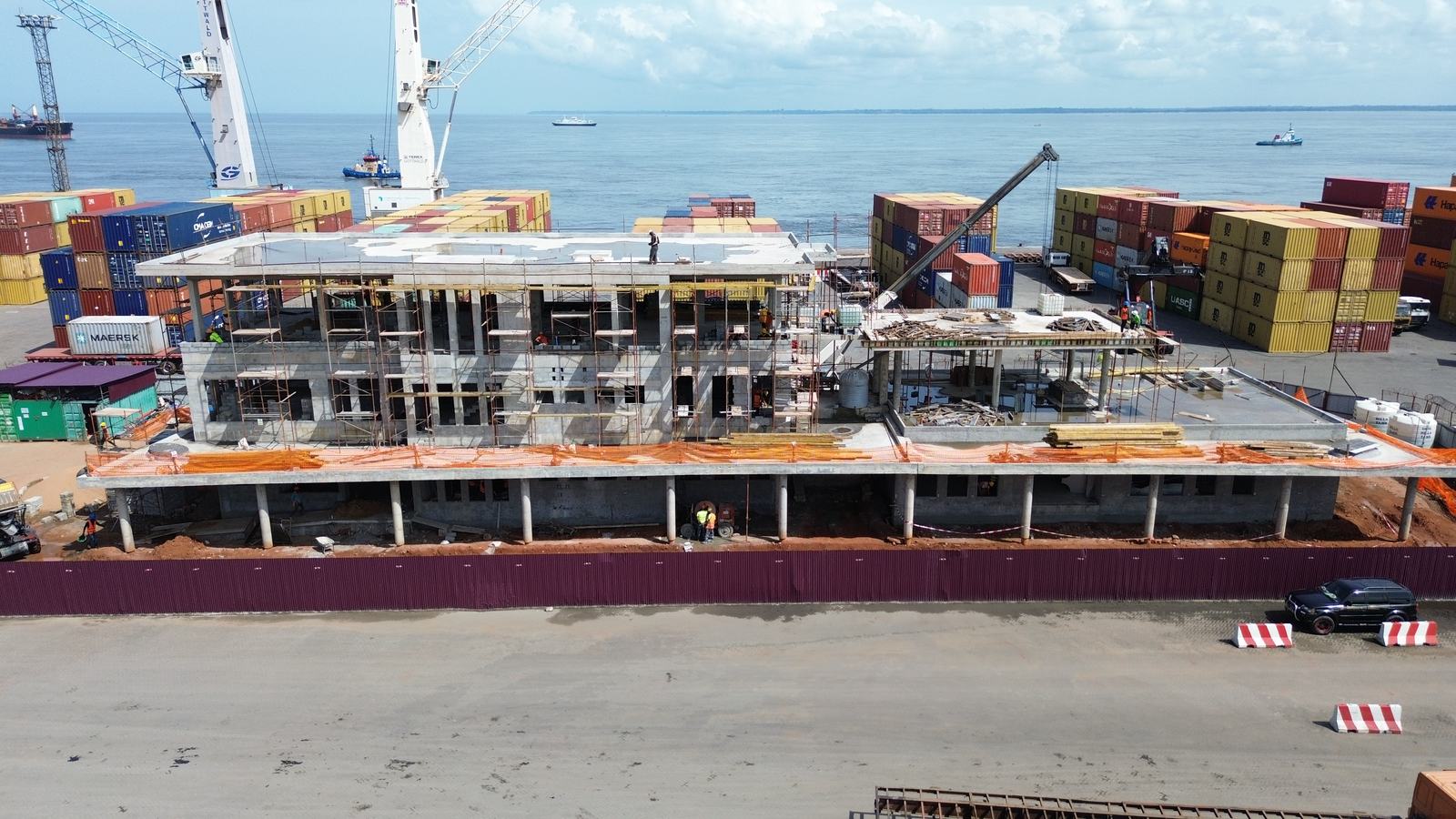
Cost factors specific to Ghana
Exchange rate exposure. Suppliers price imported materials in USD or EUR: steel, electrical equipment, specialist fittings, plant. Construction budgets denominated in GHS carry currency risk from procurement to completion. The Ghana cedi strengthened significantly in 2025 — from approximately GHS 16 per USD in early 2024 to GHS 11 by early 2026 — which reduced imported material costs in GHS terms over that period. Future cedi movement is not predictable. Projects planned over 12–18 months should budget for exchange rate movement in both directions, with historical cedi performance showing swings of 20%+ in either direction across multi-year periods.
Location premium. Accra construction costs run 10–20% above the national average for identical specifications, driven by land access costs, traffic logistics for materials delivery, and higher skilled labour rates. In premium Accra areas such as the Cantonment district, East Legon, and Airport Residential, site access constraints and premium labour rates add a further 15–25% above the Accra average. Kumasi runs close to the national average, though specialist trades are less available than in Accra. Remote sites add mobilisation and logistics costs that a per-square-metre benchmark does not capture: mine sites in the Western Region, civil works in the Volta or Upper East.
Rainy season timing. Ghana's two rainy seasons (April–June and September–November) affect earthworks, concrete curing, and materials delivery to remote sites. A construction programme that does not account for rainy season effects will run late and trigger acceleration costs.
Procurement lead times. Specialist materials imported from Europe or Asia carry 8–14 weeks of lead time at minimum. A project that does not plan materials procurement in parallel with design will lose that time from the construction programme.
Getting to an accurate budget
A benchmark figure gives project owners a planning number. An accurate budget requires a Bill of Quantities prepared by a qualified quantity surveyor against a confirmed design, priced against current market rates.
Consar's estimating teams prepare detailed construction cost estimates for projects across commercial, civil, institutional, and mining sectors. Completed projects range from commercial office buildings such as the Société Générale Ghana HQ in Accra to civil infrastructure and mine site construction across the region. A preliminary estimate takes a design brief and produces a breakdown of costs by work package (structure, envelope, fit-out, MEP, external works) that project owners can use for financial modelling and planning and budgeting before committing to full design.
If you are planning a construction project in Ghana, contact Consar's team to discuss your scope and get a preliminary cost plan. The conversation costs nothing. An inaccurate budget costs projects.
Building across West Africa
Consar builds beyond Ghana. Recent work includes the MSC Head Office in Benin, the Africa Global Logistics Head Office in Sierra Leone and mine infrastructure in Burkina Faso and Mali. The same specification, testing and site-management standards apply on every site. View completed projects across Ghana and West Africa.
Related reading
- Building Permit in Ghana: Process, Authorities, and Timelines
- Ready Mix Concrete in Ghana: Batching Plants, Transit Mixers, and Site Supply
- 7 Costly Building Mistakes to Avoid in Ghana and How to Fix Them
- Bridging the Gap: Sustainable and Quality Building Construction in Ghana
Explore Consar's residential, commercial and institutional construction, or contact the team to discuss your project.