In brief
- Apply to the Physical Planning Department of the relevant Municipal or District Assembly before breaking ground.
- A complete application needs architectural and structural drawings, a site plan, title documents and fees.
- Budget 4–8 weeks for a straightforward residential permit and 3–6 months for larger commercial or institutional projects.
Building without a permit in Ghana is illegal. Acquiring a building permit is the first legal requirement for any construction project. To get a building permit in Ghana, a project owner submits an application to the relevant Municipal Assembly before breaking ground. The Physical Planning Department of the relevant Municipal or District Assembly approves construction before it starts. A project that breaks ground without this approval risks stop-work orders, demolition notices, and penalties that cost more than the permit itself.
After 40 years of delivering construction projects across Ghana, Consar's teams understand the permit process from the inside. This guide covers the key steps, the authorities involved, and the timelines project owners should expect.
Who Approves Building Permits in Ghana
Building permit applications in Ghana go to the Physical Planning Department of the relevant Municipal Assembly or District Assembly. In Accra, this is the Accra Metropolitan Assembly. In Kumasi, the Kumasi Metropolitan Assembly handles approvals. Secondary cities and district capitals each have their own assembly with planning authority over construction in their area.
The Physical Planning Department reviews planning and building applications against the Building Code of Ghana and local planning regulations. Development and building permitting falls under this department's authority in every district. The department checks the application for compliance with land use zoning, setback requirements, building height limits, plot coverage ratios, and structural and fire safety standards.
Applications for large or complex projects may involve additional agencies: the Ghana Fire Service reviews fire safety provisions, the Environmental Protection Agency reviews environmental impact for projects above a certain threshold, and utility providers (ECG for power, GWCL for water) may need to confirm service capacity. For commercial projects awarded under government contracts, contractors must also hold current registration with the Public Procurement Authority before the construction contract can proceed.
The Building Permit Application Process in Ghana
A standard building permit application in Ghana requires the following documents and submissions.
Architectural drawings. Full architectural drawings of the proposed building, showing floor plans, sections, and elevations at appropriate scale, prepared and signed by a registered architect.
Structural drawings. Structural design drawings, showing foundation type, column and beam sizes, slab thickness, and reinforcement details, prepared and signed by a registered structural engineer.
Site plan. A site plan at a scale that shows the plot boundaries, proposed building footprint, access points, setbacks, and the relationship of the building to adjacent plots and roads.
Title documentation. Evidence of land ownership or the owner's authorisation to build on the land. In Ghana, title documents include freehold title, leasehold agreements, and customary land allocation letters. The title documentation must be in order before the Physical Planning Department will process a building permit application.
Application form and processing fees. The permit application form from the relevant Municipal Assembly, completed and submitted with the applicable processing fees. Fee schedules vary between assemblies and scale with the floor area of the proposed building.
Building Permit Timelines: What Project Owners Should Expect
Building permit processing times in Ghana vary between assemblies and with the complexity of the project.
For a straightforward residential permit in Accra, project owners should budget 4 to 8 weeks from submission of a complete application to permit issuance, assuming no requests for additional information or revisions to drawings.
For commercial or institutional projects, the timeline extends. Multi-storey commercial buildings, projects in controlled development areas, or projects requiring environmental impact assessment add review stages that extend the permit timeline to 3 to 6 months.
The critical point: permit applications submitted with incomplete or non-compliant drawings restart the clock. Every revision request from the Physical Planning Department adds weeks to the process. An architect who understands the local planning regulations and submits compliant drawings on first submission saves the project that time.
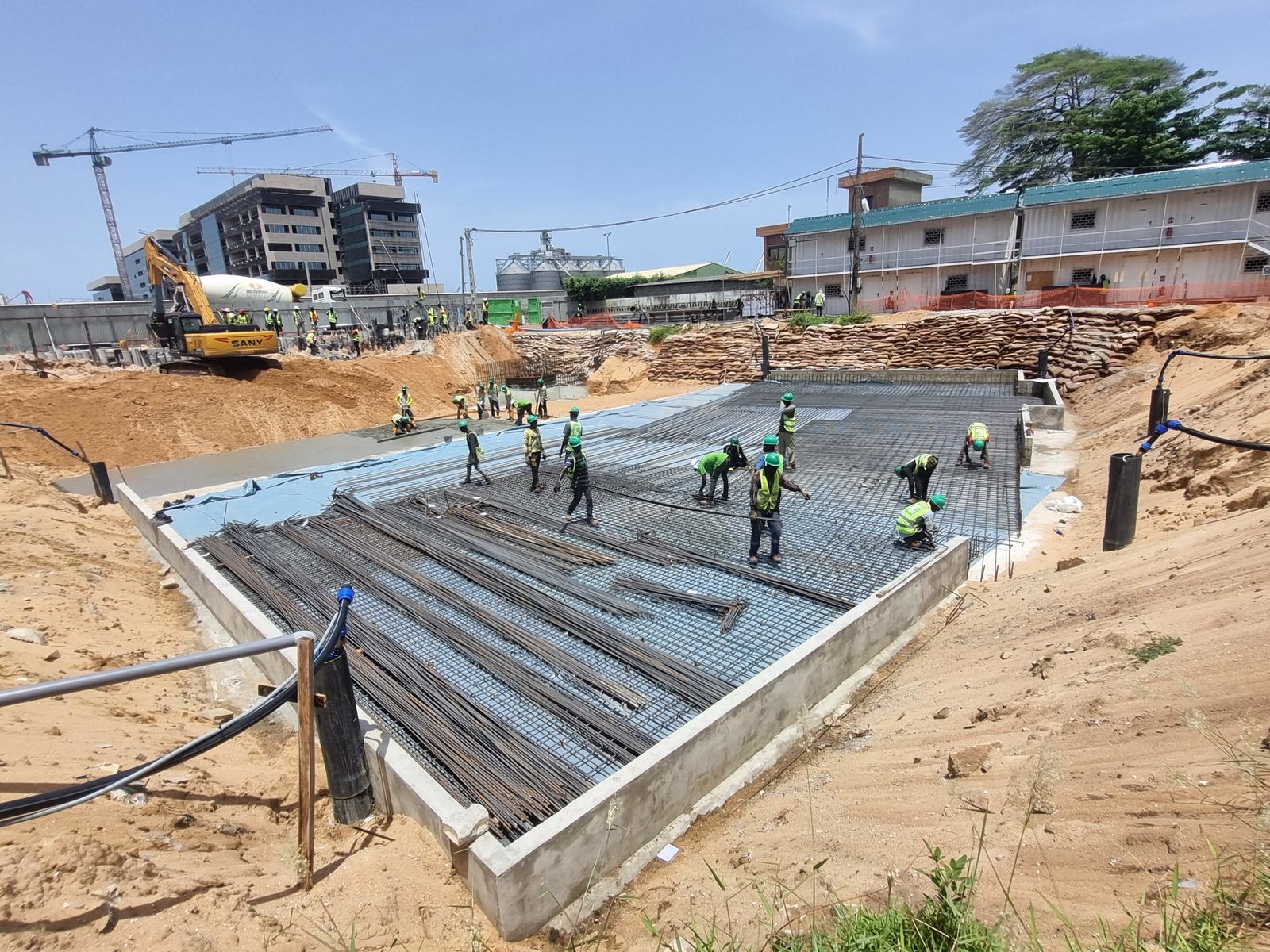
Consar's teams build permit timelines into construction programmes at project inception. Projects such as the GNPC Head Office involved multi-agency permit coordination that required planning from the earliest stage. A contractor who treats the permit as the client's problem to solve, then mobilises equipment to site and waits, transfers cost and delay risk to the client. Consar plans around the permit process so that site preparation, materials procurement, and detailed construction planning all proceed in parallel with the building permit application.
Building Code Compliance During Construction
Permit approval covers the design. Compliance during construction is a separate obligation. The Physical Planning Department carries out site inspections at key stages (foundation, structural frame completion, roof level) to verify that the building as constructed matches the approved drawings.
A contractor who builds to a specification different from the conditions specified in the permit and approved drawings creates a compliance problem that complicates the occupancy permit (certificate of completion) at project end. Consar's site management teams work to approved drawings and document any required design changes through formal variation processes that include the project engineer and permit authority where required.
If you are planning a construction project in Ghana and need a contractor who understands the permit process and plans around it, contact Consar's team. View Consar's project history across Ghana for context on the range of projects delivered through Ghana's permitting system.
Building across West Africa
Consar builds beyond Ghana. Recent work includes the MSC Head Office in Benin, the Africa Global Logistics Head Office in Sierra Leone and mine infrastructure in Burkina Faso and Mali. The same specification, testing and site-management standards apply on every site. View completed projects across Ghana and West Africa.
Related reading
- Construction Cost in Ghana: 2026 Guide
- Institutional Construction in Ghana: Schools, Hospitals, and Public Buildings
- 7 Costly Building Mistakes to Avoid in Ghana and How to Fix Them
Explore Consar's commercial construction and residential construction, or contact the team to discuss your project.